
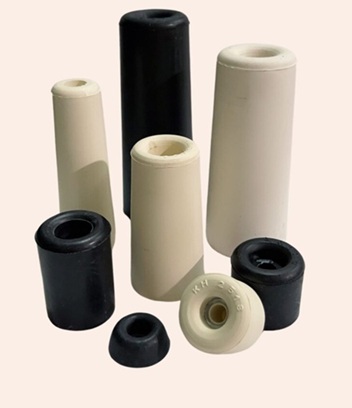
Door Rubber Stopper
Door rubber stoppers are durable cushioning components designed to limit door movement and prevent impact damage to doors, walls, bulkheads and surrounding fittings. The rubber body absorbs shock, reduces noise and protects surfaces during frequent door operation.
Suitable for marine vessels, offshore facilities, industrial buildings, workshops and commercial premises.
Key Features
- Durable rubber construction
- Absorbs impact and reduces noise
- Prevents damage to doors, walls and bulkheads
- Helps protect hinges, handles and door fittings
- Resistant to wear and repeated compression
- Compact and easy to install
- Available in different shapes, sizes and hardnesses
- Standard and customised designs available
Typical Applications
- Vessel accommodation doors
- Engine-room and machinery-space doors
- Watertight and weathertight doors
- Access doors and hatches
- Ship cabins and passageways
- Electrical and control-panel doors
- Industrial workshops and warehouses
- Offices and commercial buildings
- Vehicle and equipment compartments
Available Options
| Property | Available Options |
|---|---|
| Material | Natural rubber, EPDM, NBR, neoprene or rubber blend |
| Design | Cylindrical, dome, rectangular, conical or custom profile |
| Mounting | Screw-fixed, bolt-fixed, stud-mounted or adhesive-backed |
| Hardness | Soft, medium or hard rubber |
| Colour | Black, white, grey or subject to availability |
| Base | Rubber, steel-backed or stainless-steel-backed |
| Size | Standard or customised dimensions |
| Environment | Indoor, outdoor, oil-resistant or weather-resistant grades |
Product Benefits
- Provides effective door-impact cushioning
- Helps prevent dents, scratches and surface damage
- Reduces slamming noise and vibration
- Extends the service life of doors and fittings
- Provides a simple, economical replacement solution
- Suitable for new installations and maintenance replacements
Selection Information Required
Please provide:
- Required shape and dimensions
- Quantity required
- Door type and installation location
- Mounting method and hole dimensions
- Indoor or outdoor application
- Exposure to oil, seawater, heat or chemicals
- Required rubber hardness, if known
- Photographs, drawings or an existing sample
